Magalloway Conservation Story Featured on Maine Public, Borealis TV Show
April 24, 2026
Magalloway Featured on Episode Four | Borealis Season Three
Join host Aislinn Sarnacki as she explores places off the Old Canada Road and ventures to western Maine to meet the people behind the Magalloway lands and waters project. Borealis, produced by Maine Public, is an Emmy-award-winning outdoors show highlighting the nature of Maine. Hear from each project partner and learn about the significance of this project for climate, fish and wildlife, wilderness and Maine’s economy.
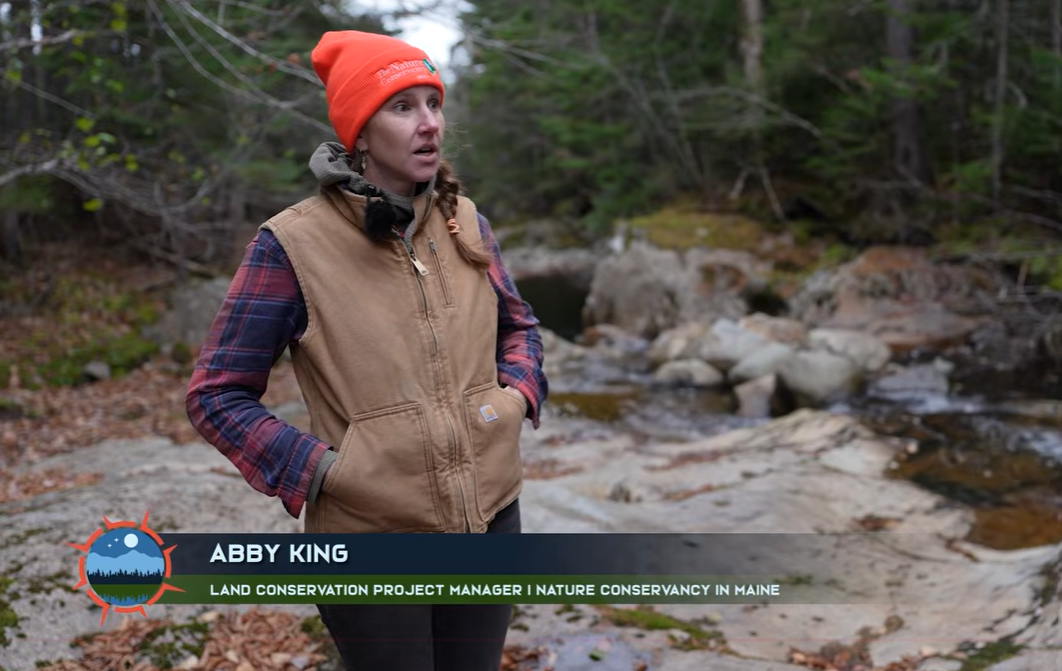
“The Magalloway project is that missing link in a big chain of conserved land, and so this project is hugely important for filling in that missing piece. We are working in an area that’s the largest intact mixed-temperate forest in North America. A big reason that connectivity is important is that wildlife need to be able to migrate across the landscape and count on that habitat as part of their range.” – Abby King, land conservation project manager, The Nature Conservancy in Maine.
What if there was a large landscape in northern New England where animals could migrate in a warming climate? Where development was prohibited but sustainable forestry was still allowed? Where outdoor recreation could continue alongside land set aside for wilderness? That’s the goal of the Magalloway Conservation Initiative.
In the Rangeley Lakes region of western Maine, an ambitious effort is underway to conserve tens of thousands of acres in historic Wabanaki territory. For centuries, these have been prized hunting and fishing grounds, home to bear, lynx, deer and moose and one of the last strongholds of native brook trout in the country.
The woods bathed in moss on the Magalloway project lands.
But with a recent construction boom, forest fragmentation and rising temperatures, woods and wildlife are under threat. The Magalloway Conservation Initiative aims to safeguard both while also protecting public access to the region.
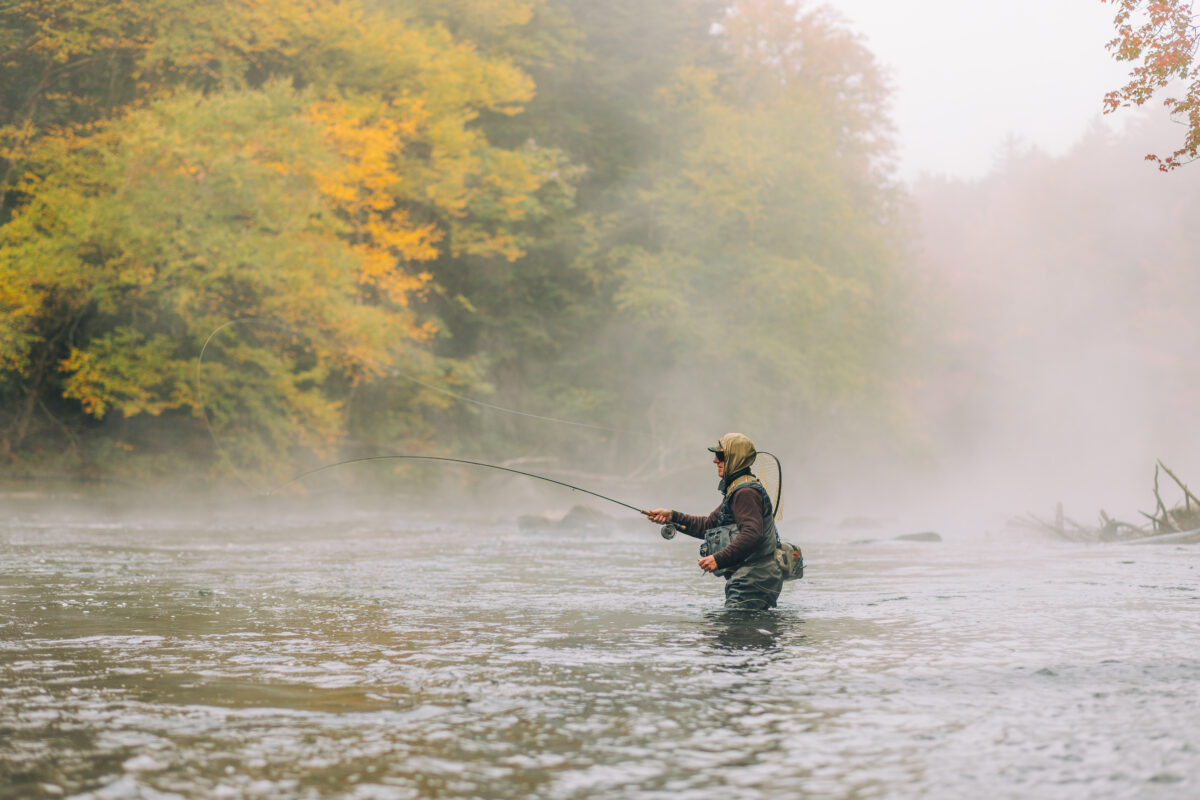
In mid-October, angler and fishing guide Alex Caisse navigates his pickup truck along logging roads in the woods of remote western Maine, not far from the northern New Hampshire border. He’s showing off highlights of the Magalloway project, nearly 80,000 acres of woods and waters that four organizations — The Nature Conservancy, Rangeley Lakes Heritage Trust, Forest Society of Maine and Northeast Wilderness Trust — are working together to conserve.
“The area really speaks for itself,” Caisse says, setting off toward Aziscohos Lake. “It’s something that’s uniquely special in the way that it looks and the way that it feels.”
It’s moose hunting season. The leaves have turned orange and gold but Caisse still has fishing on his mind. For two decades he worked in the restaurant business and then, about 13 years ago, he became a fishing guide. He moved to Rangeley in part, he says, because of the cold, swift-moving waters of the Magalloway River. That’s how much he loves this place and why he’s passionate about keeping it intact.
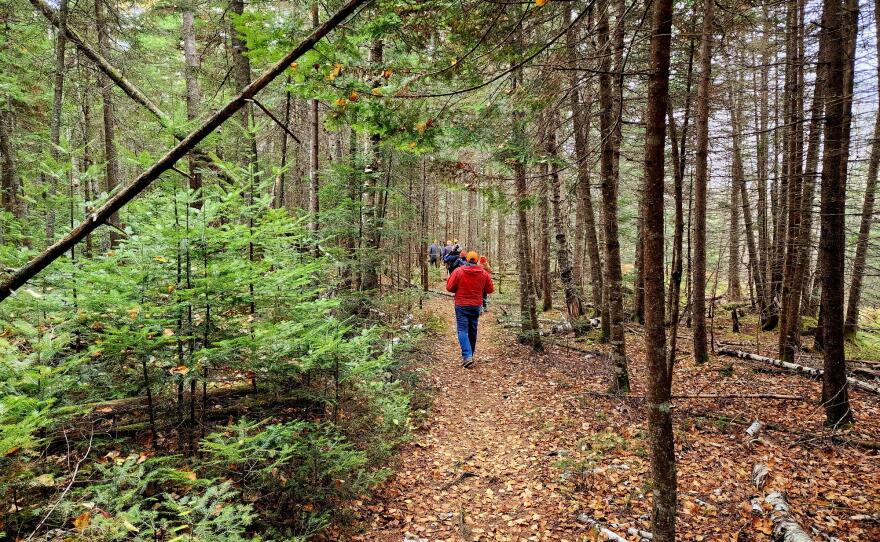
Getting out of the truck, he takes a short walk through some dense woods to the edge of the upper Magalloway. It’s quiet and remote, one of Caisse’s favorite spots.
“When you come here, you lose sight of all the other things that are going on in the world and you focus more on the moment,” Caisse says. “You don’t focus on tomorrow. You don’t focus on yesterday. And so oftentimes, I think it is like church out here because it’s just so peaceful.”
A wooded trail leads to the Upper Magalloway River.
The groups have until the end of May 2026 to raise $62 million to conserve the property. Right now, they’re a little over halfway to the goal. But if they’re successful, they’ll have secured the final parcel on a remote and wild landscape of more than half a million connected acres that have previously been conserved.
Read the full post and listen to the Maine Public radio story.

 Back to News & Press